Get Access
Your information will not be used for marketing purposes and we never sell your data!
All research licensed under CC BY 4.0
Executive Summary
Electricity demand is accelerating across the United States, and many states are running headlong into electricity system constraints. Abrupt and unpredictable federal actions are disrupting even the best-laid investment plans by forcing deteriorating coal plants to stay online, investing in expensive new gas plants, repealing tax credits for wind and solar power, and stalling development of planned and already under-construction clean power projects.
This policy approach is fundamentally at odds with the economic reality—clean energy continues getting cheaper and is the most economic option.[1]
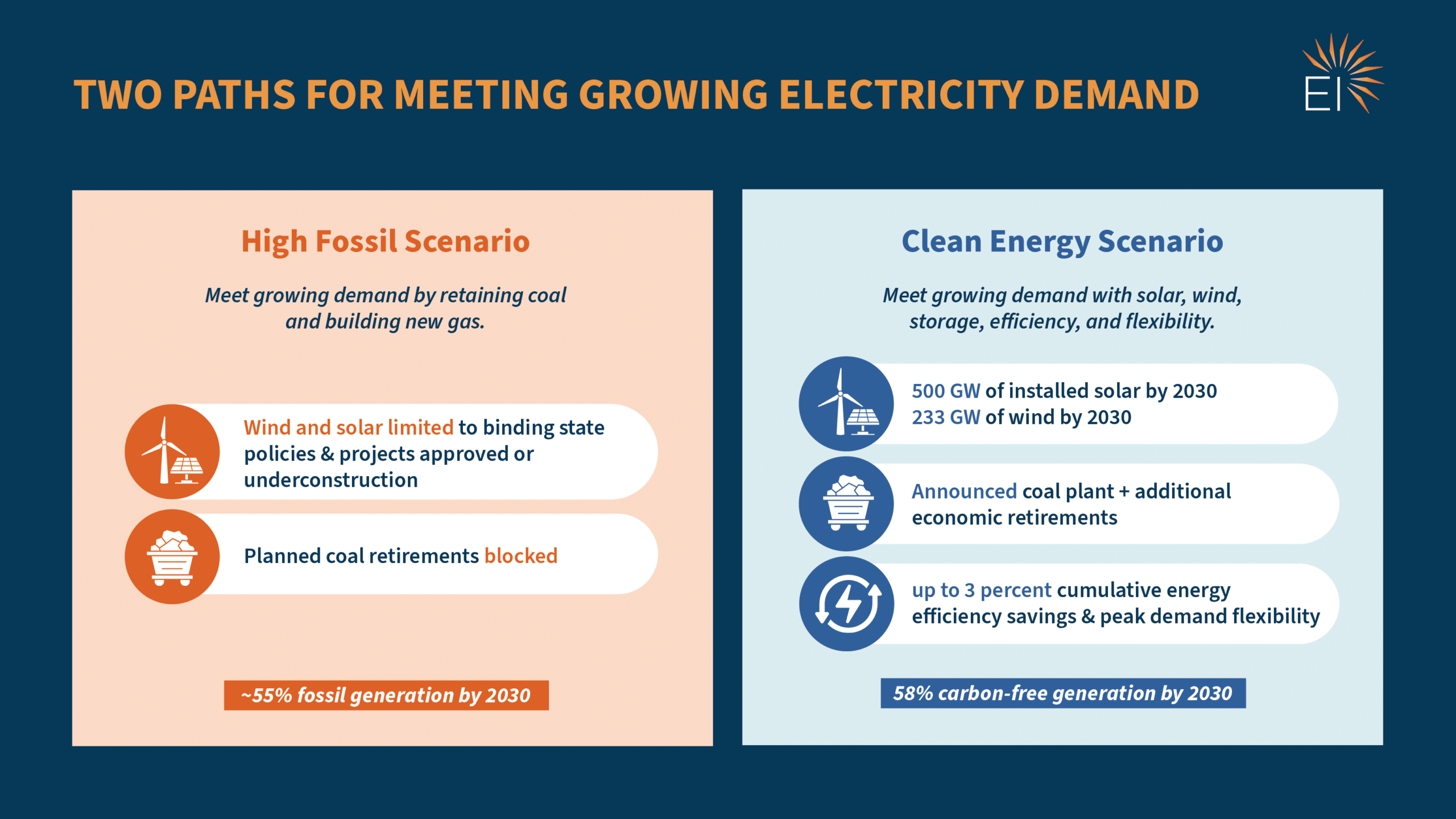
To better understand how to best meet growing demand in today’s changing landscape, we conducted a national analysis examining two futures for meeting electricity demand through 2030: one where the U.S. doubles down on fossil fuels as demand accelerates, consistent with the current federal policy approach, and another where America takes full advantage of clean energy to meet growing electricity use.
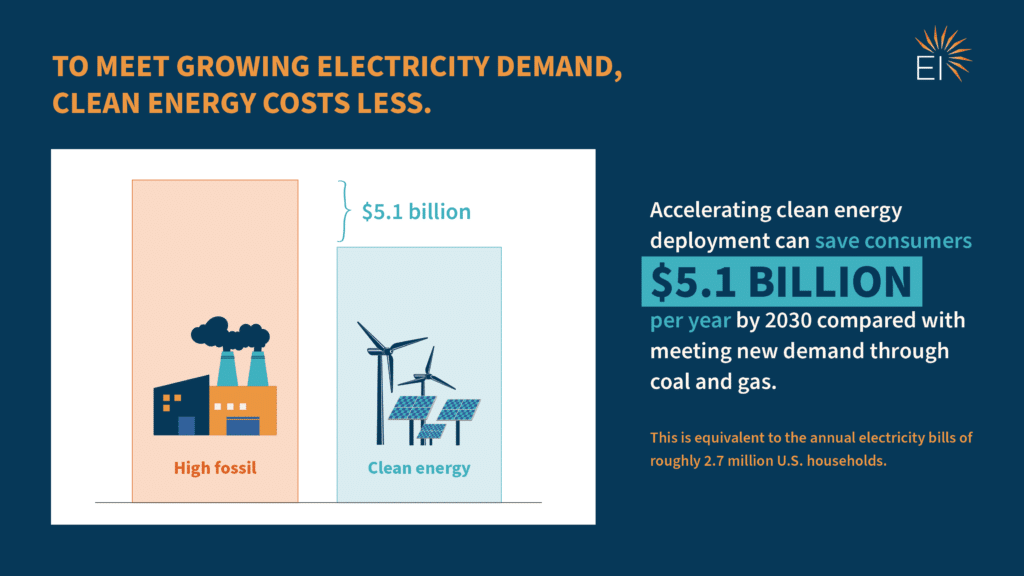
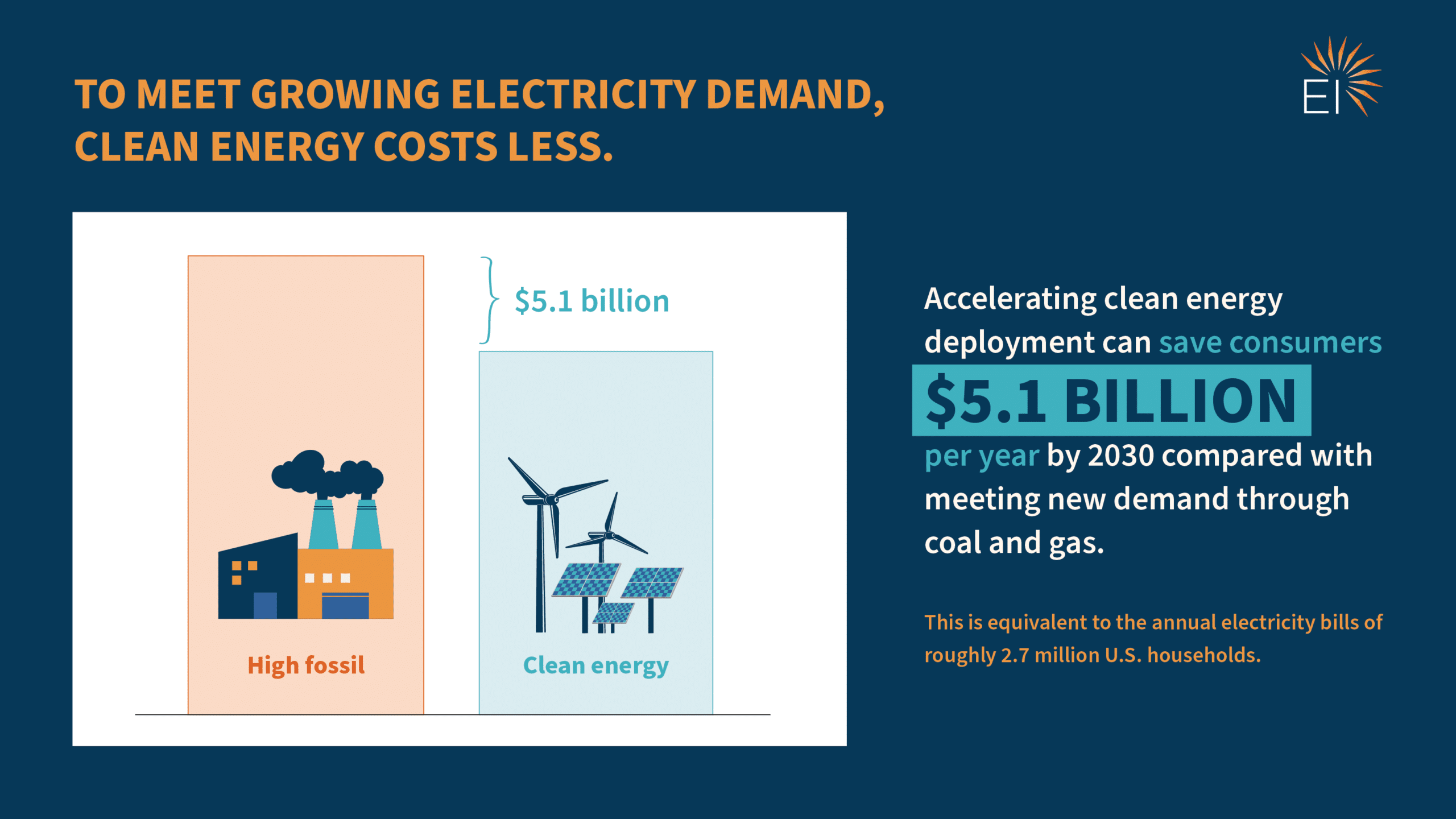
We found that meeting America’s expected demand growth with a fossil fuel-heavy approach will add $29.7 billion annually to customer bills by 2030. However, the clean energy scenario reduces overall costs to meet load growth by $5.1 billion annually that year compared to a high fossil scenario, a savings of 17 percent.
These costs will be passed through to both existing and new customers, and policymakers in many states are working to ensure that large, rapidly growing customers like data centers pay their fair share.
This means the cost of meeting America’s expected electricity demand growth will be significant, but doing it with a clean energy portfolio reduces the overall system cost.
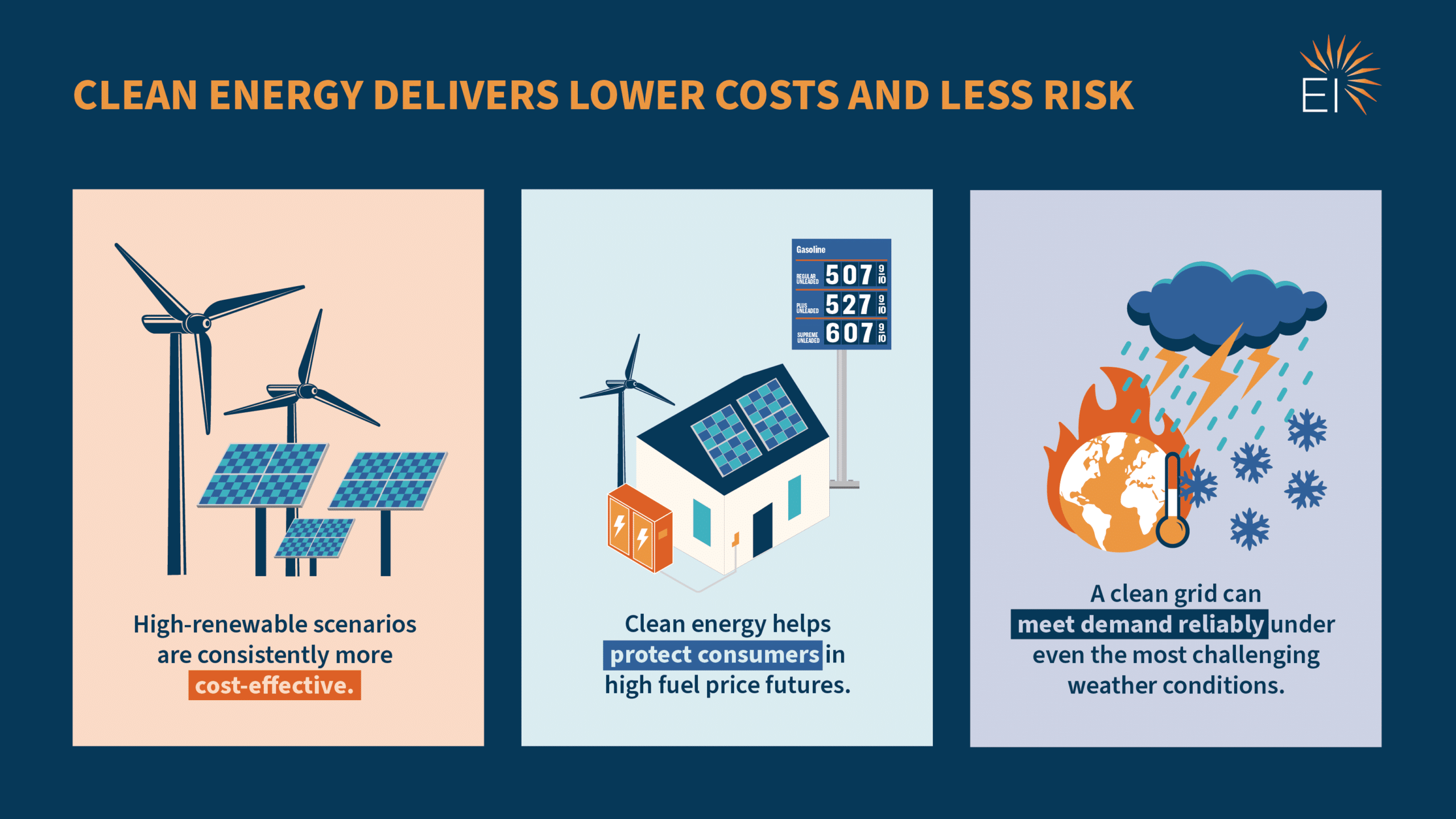
Accelerating solar, wind, and energy storage deployment will protect customers from high costs, price shocks, and pollution. Doubling down on fossil fuels would be more expensive, putting customers and communities at financial and environmental risk.
A spike in coal and gas prices like the U.S. saw in 2022—which could happen again due to events like booming electricity demand, geopolitical instability, and rising LNG exports—would push up electricity costs $40.5 billion per year under a fossil fuel-heavy scenario. Clean energy would reduce this spike by $8.4 billion, yielding total savings of $13.5 billion per year compared to relying on fossil fuels.
Our analysis shows the U.S. can meet growing demand with clean energy, and a clean, resilient grid can reliably meet demand under even the most challenging weather conditions.
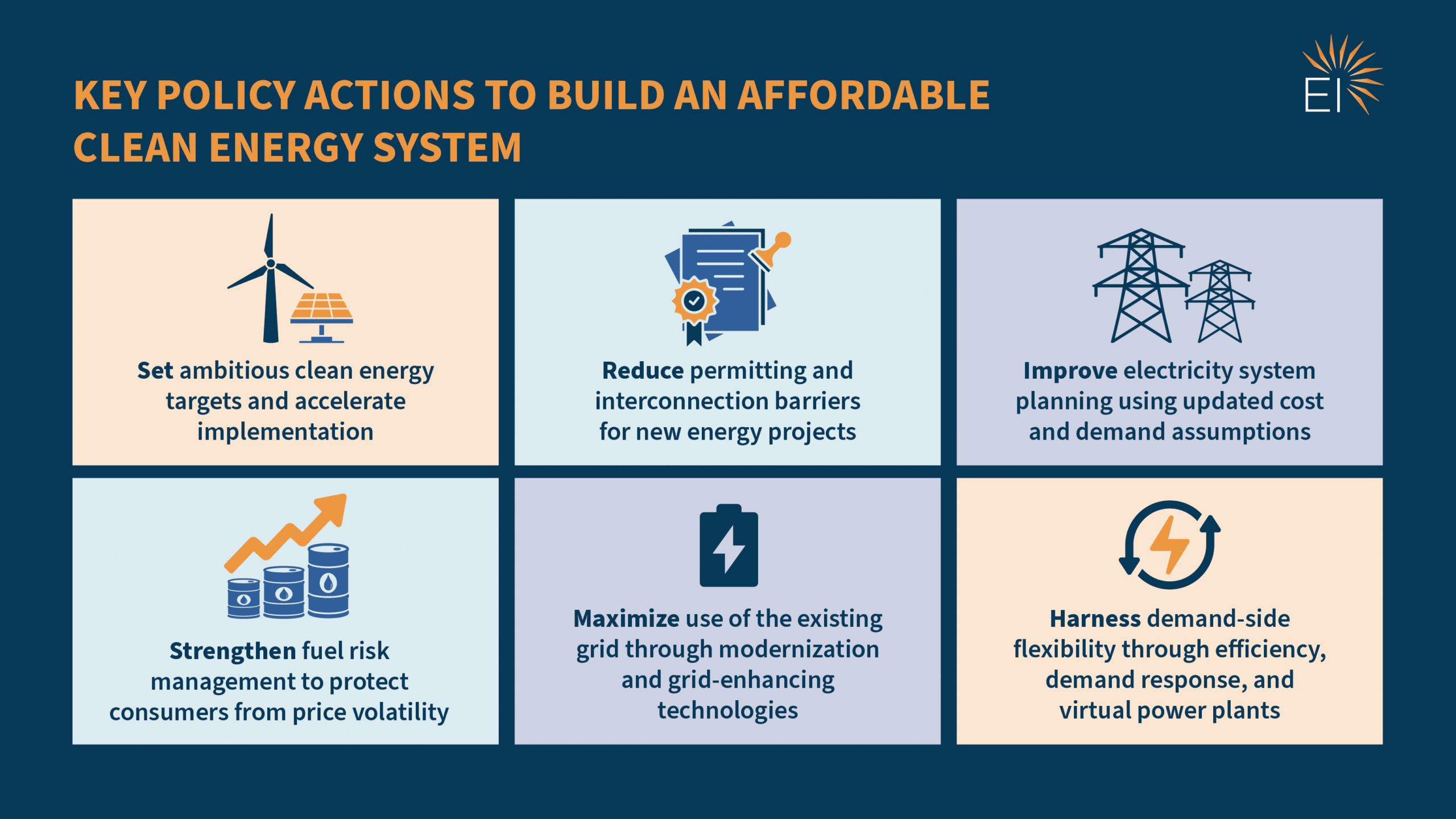
This is a near-term outlook in a time of rapid transition. The electricity industry is mak-ing decisions today that will determine what gets built by 2030, and the stakes are high to get it right, so our policy recommendations looks toward that window for inte-gration into the utility planning, permitting, and contracting process.
How America chooses to meet this moment will have long-term implications. If we prioritize affordability, we can meet the surging electricity needs of data centers and other growing loads in a way that costs less, produces less air pollution and contrib-utes less to global climate change. If we fail to grasp this opportunity, consumers will instead be saddled with high costs and dirty air.
[1] New U.S. Electric Generating Capacity Expected to Reach a Record High in 2026, 2026, https://www.eia.gov/todayinenergy/detail.php?id=67205.