
Get Access
Your information will not be used for marketing purposes and we never sell your data!
All research licensed under CC BY 4.0
Executive Summary
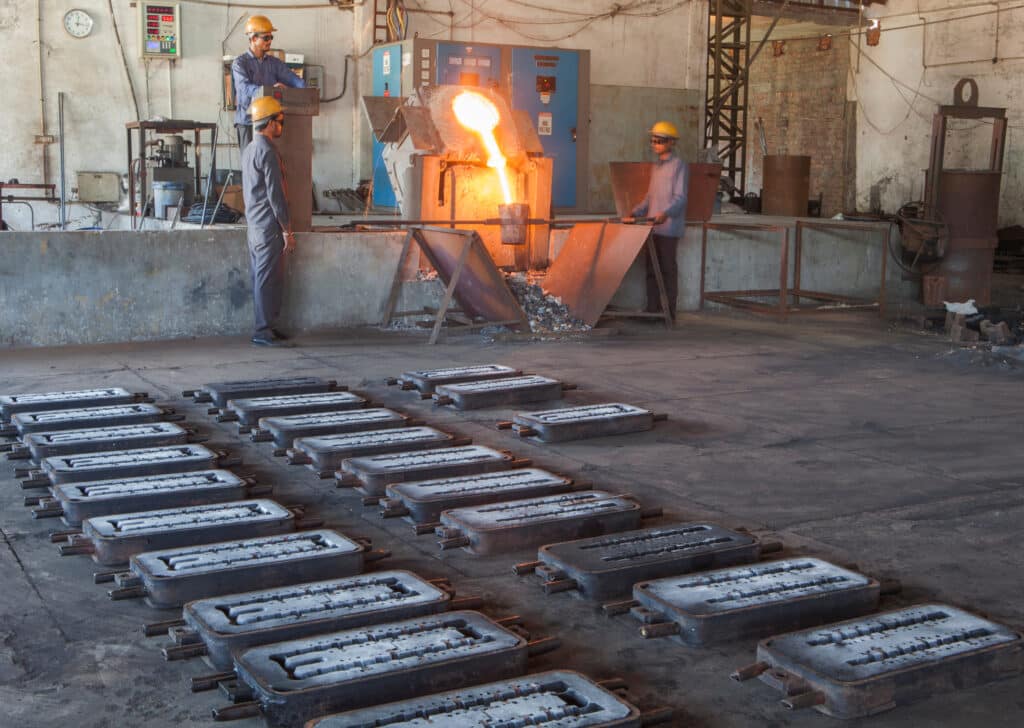
India’s industrial sector is an economic powerhouse, providing 19.5 million jobs[1] and 17 percent of the country’s Gross Domestic Product (GDP).[2] The sector is rapidly becoming the backbone of the modern Indian economy, manufacturing everything from the steel and cement that propel industrialization to the cars and electronics that can lift millions out of poverty.
But that economic engine comes with massive energy and pollution costs. Industry accounts for almost half of India’s final energy use.[3],[4] Over 40 percent of that energy is coal that manufacturers burn onsite, creating severe air pollution and public health impacts that the country is striving to mitigate.[5] Another 27 percent is from petroleum and natural gas,[6] heavily imported fuels that typically cost 4-4.5 times more than coal per unit energy,[7],[8] and can soar even higher in price during global supply chain shocks, such as the COVID-19 pandemic and the early 2026 conflict in Iran.
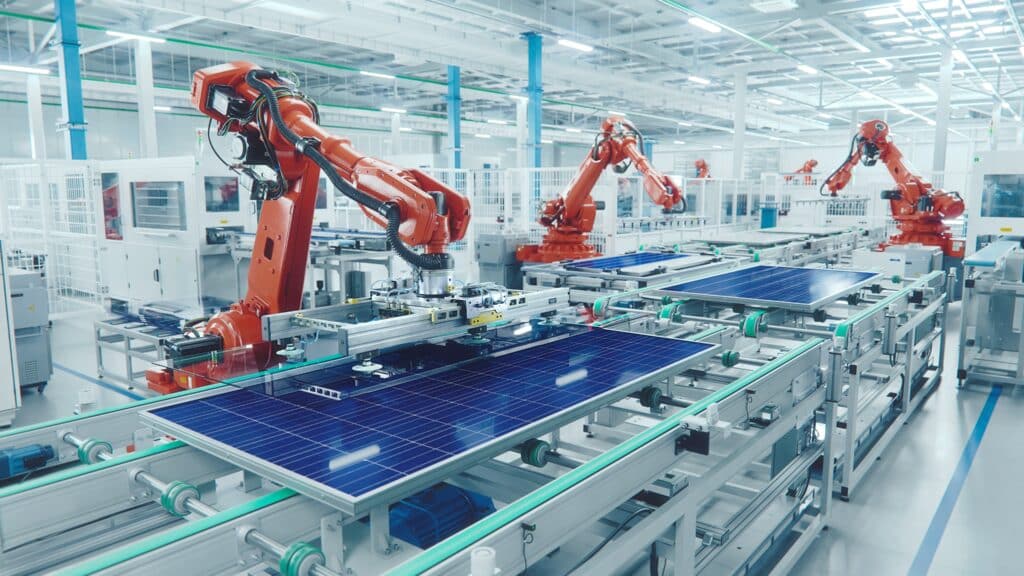
Fortunately, the perfect solution sits right in India’s lap: solar-powered, electrified industry. India has the lowest solar prices among major economies, with recent auctions clearing a levelized cost of electricity (LCOE) under ₹2.5 per kilowatt-hour (kWh),[9] and electricity is used more efficiently than fossil fuels. Even when accounting for the costs of energy storage and grid fees for captive renewables, solar is often the cheapest option for Indian industry. By switching to solar energy, and to commercially available electric technologies like heat pumps and thermal batteries, Indian industry can slash its costs, cut its energy use, and deliver clean air.
Specifically, our analysis finds that electrifying industrial heat is already cheaper than producing heat with biomass, natural gas, or petroleum across all temperatures needed by industry. Electrified heat is also cheaper than coal-based heating (the cheapest fossil fuel in India) in three out of five temperature bands (<100°C, 100-200°C, and 1,000-1,800°C), which together account for 55 percent of India’s combustionbased industrial heating.
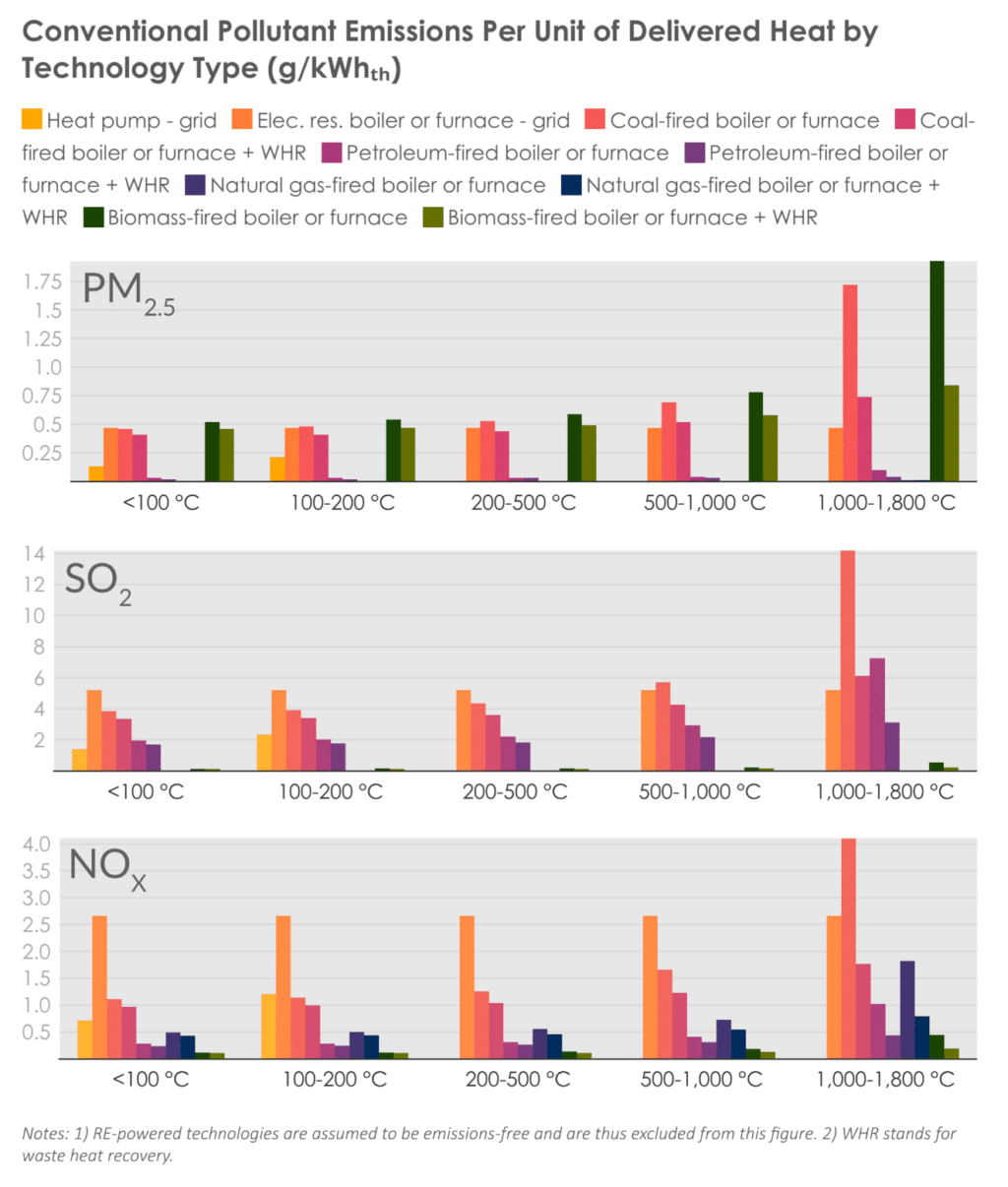
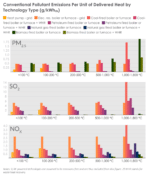
Electrification can reduce industrial energy use by 22 percent and cut over half of the sector’s CO2 emissions when backed by clean energy. Industrial electrification can also reduce sector-wide emissions of non-GHG pollutants, cutting particulate matter (PM2.5) by 38 percent, sulfur dioxide (SO2) by 60 percent, and nitrogen oxide (NOx) by 53 percent. By avoiding those air pollutants, electrifying all eligible industrial processes in India can save nearly 794,000 lives annually while also halving the incidence of numerous nonfatal health complications.
Effective policy can catalyze long-term, meaningful change through actions that increase industry’s access to low-cost solar, drive adoption of clean industrial technologies, and enable the continued development of clean technologies and India’s workforce.
[1] Government of India, Ministry of Statistics & Programme Implementation, National Statistics Office, “Annual Survey of Industries (ASI) Results for 2023-24,” August 27, 2025, https://www.mospi.gov.in/sites/default/files/press_release/PIBNote_ASI%202023-24-English_rev.pdf.
[2] Press Information Bureau, Govt. of India, Mumbai, “India Achieves ₹14 Lakh Crore in Production, ₹5.3 Lakh Crore in Exports, Says DPIIT Secretary at CII Manufacturing Summit,” Government of India Press Information Bureau (blog), March 25, 2025, https://www.pib.gov.in/PressReleasePage.aspx?PRID=2114840.
[3] Pacific Northwest National Laboratory, “Global Change Assessment Model,” 2025, https://github.com/JGCRI/gcam-core.
[4] Jeff Rissman, Nik Sawe, and Sonali Deshpande, “The Industrial Transformation Technology And Investment Model,” Excel tool, October 29, 2025, https://energyinnovation.org/report/the-industrial-transformation-technology-and-investment-model/.
[5] ERIA Asia Zero Emission Center, “Study on the Introduction of Heat Pumps and Once-Through Boilers to Support GX in Asia” (ERIA Asia Zero Emission Center, January 2025), https://www.eria.org/research/study-on-the-introduction-of-heat-pumps-and-once-through-boilers-to-support-gx-in-asia.
[6] Jeff Rissman, Nik Sawe, and Sonali Deshpande, “The Industrial Transformation Technology And Investment Model,” Excel tool, October 29, 2025, https://energyinnovation.org/report/the-industrial-transformation-technology-and-investment-model/.
[7] NITI Aayog, “India Energy Security Scenarios (IESS) 2047 v3.0” (Delhi, India: Government of India, July 2023), https://iess2047.gov.in/.
[8] CGD India, “Gujarat Gas Increases Industrial Gas Price,” October 30, 2023, https://cgdindia.net/gujarat-gas-increases-industrial-gas-price/.
[9] International Energy Agency, “Auction of Solar Corporation of India (SECI)” (Paris, France, July 11, 2025), https://www.iea.org/policies/6373-auction-of-solar-corporation-of-india-seci.