

Get Access
Your information will not be used for marketing purposes and we never sell your data!
All research licensed under CC BY 4.0
Executive Summary
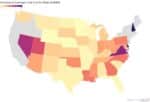
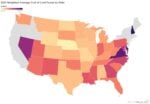
Since 2021, the cost to generate coal power in the United States has increased faster than inflation, on average, meaning coal is increasing inflationary pressure on American electricity consumers. This updated analysis shows that in 2024, coal power was 28 percent more expensive than in 2021, costing consumers $6.2 billion more to generate power via coal than it would have cost in 2021.
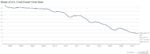
Coal power is declining across the U.S., largely because of these poor economics. Total coal power use peaked in 2007 and has fallen ever since, generating barely 15 percent at the beginning of 2025. Between 2021 and the beginning of 2025, nearly 50 plants retired or are no longer burning coal, and over a third of the remaining fleet is expected to retire by 2030.[1]
This reality sits in stark contrast to U.S. federal power policy. The Trump administration issued a series of executive orders in April 2025 aiming to keep coal plants running despite their impact on electricity consumers. These include orders to reduce the number of plants subject to the U.S. Environmental Protection Agency’s Mercury and Air Toxics Standards,[2] and to keep uneconomic plants running long-term using short-term emergency powers.[3] This has already resulted in several plants being ordered to remain open past the retirement dates that utilities, state regulators, and grid operators had planned because the plants were too expensive and not needed for reliability.
But these orders ignore the economic fundamentals underpinning coal’s decline: Wind, solar, batteries, natural gas, and efficiency are simply cheaper than coal power. Previous Energy Innovation research showed 99 percent of America’s existing coal plants were more expensive to continue operating compared to replacement with local wind or solar.[4] Attempts to keep coal running beyond plants’ economic lifetime will force families and businesses to pay higher electricity bills.
This new analysis shows coal plants have only gotten more expensive since our last analysis based on the 2021 coal fleet, which largely followed the trends of the overall cost of coal for fuel.
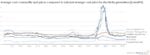
Prices spiked in 2022, after Russia invaded Ukraine. This event increased all fossil fuel prices. While coal fuel prices fell after 2022, they remained elevated over 2021 levels in most regions of the country, and the national average price of coal delivered to the electricity sector remained elevated, too. These higher prices are seen most acutely in the Appalachian coal producing regions, where coal has been more expensive for years due to the depth of coal within the mines, a problem that only becomes more acute with more mining.[5]
Our updated analysis uses the same methodology as detailed in the Coal Cost Crossover 3.0 for calculation of coal costs, and shows coal’s economic decline has continued.
[1] Dennis Wamsted and Seth Feaster, “Nowhere To Go But Down For U.S. Coal Capacity, Generation,” Institute for Energy Economics and Financial Analysis, 2024, https://ieefa.org/resources/nowhere-go-down-us-coal-capacity-generation.
[2] The White House, “Regulatory Relief For Certain Stationary Sources To Promote American Energy,” The White House, 2025, https://www.whitehouse.gov/presidential-actions/2025/04/rregulatory-relief-for-certain-stationary-sources-to-promote-american-energy/.
[3] The White House, “Strengthening The Reliability And Security Of The United States Electric Grid,” The White House, 2025, https://www.whitehouse.gov/presidential-actions/2025/04/strengthening-the-reliability-and-security-of-the-united-states-electric-grid/.
[4] Eric Gimon, Michelle Solomon and Mike O’Boyle, “Coal Cost Crossover 3.0,” Energy Innovation, 2023 https://energyinnovation.org/report/the-coal-cost-crossover-3-0/.
[5] U.S. Energy Information Administration, “Coal Explained: Coal Prices And Outlook,” U.S. Energy Information Administration, https://www.eia.gov/energyexplained/coal/prices-and-outlook.php