While gas stations signs display the price of diesel to drivers every day, heating oil – a near-identical product used for home heating – is also hitting record high prices due to global conflict. But, unlike diesel, heating oil’s inflationary pressure flies under the radar since most homeowners only fill their home oil tanks two to four times a winter.
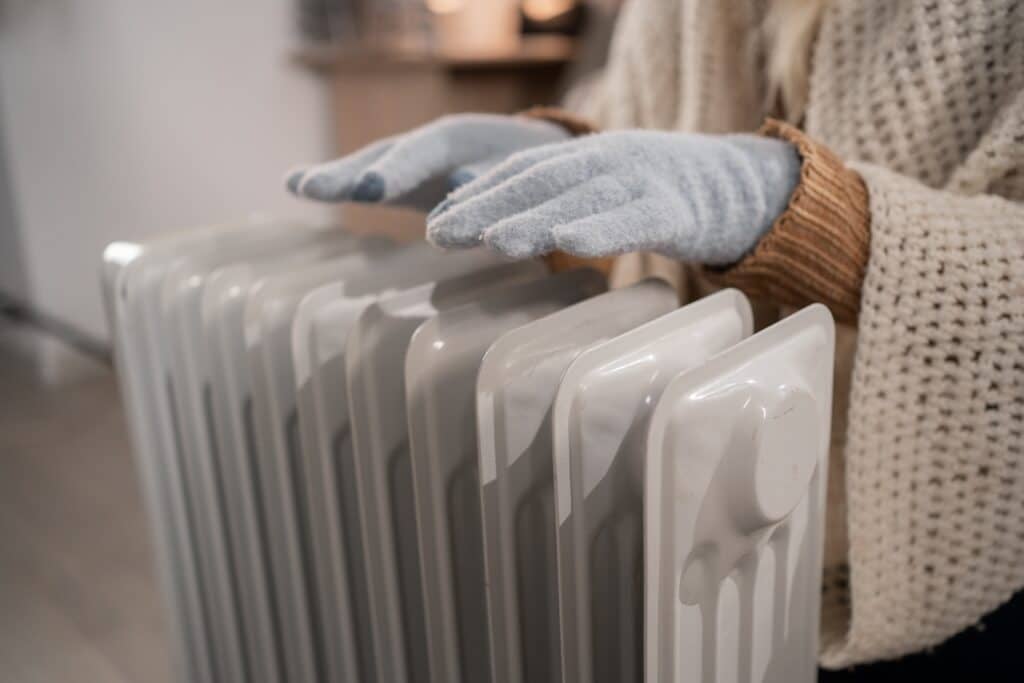
Despite avoiding headlines, the price of heating oil (also known as fuel oil) threatens to make this the most expensive winter ever for families heating their homes in the Northeast United States and Alaska.
The October 14th Consumer Price Index release reported that surging energy costs inflated overall prices by nearly 4 percent over the past year and found fuel oil prices increased 74.2 percent from September 2025 to 2026.[1] And as of the U.S. Energy Information Administration’s (EIA) October 15th release, prices for residential customers averaged $6.14 a gallon, a 73-percent increase from the $3.54 per gallon cost a year prior.[2]
The EIA estimates this means each household will pay $230 to $590 more to heat their home this winter, even if the season is milder than last year.
War, corporate profits, global price volatility cause high diesel and fuel oil prices
Several factors are causing this heating oil price increase to hit homeowners:
- War in the Middle East has disrupted oil passage through the Strait of Hormuz and the Bab al-Mandab Strait;
- Global refinery capacity is tight, in part due to Russia’s war in Ukraine and because U.S. refineries delayed maintenance throughout 2026 to capture elevated profit margins;
- Diesel is traded on a global market, and corporations seek the highest possible profits, so U.S. consumers face similar price volatility to buyers around the world
This rise in global conflict has highlighted that even though the U.S. produces and exports the most oil in the world, fossil fuels are global commodities and are subject to significant daily and seasonal price spikes, all out of the control of everyday consumers.
Home heating bills could cost up to $2,700 this year
Exactly how high home heating bills will go this year depends on three main criteria: the fuel you use for heating, the price of that fuel, and how cold it is this year in your area.
Heating oil is mainly used in the Northeastern U.S. and in Alaska, and 10 states compose 80 percent of all American households using the fuel.[3] Excluding these states – New York, Pennsylvania, Massachusetts, Connecticut, Maine, New Hampshire, Rhode Island, Vermont, Alaska, and Delaware – only 1 percent of households heat with fuel oil. New Yorkers have one fourth of homes heated with fuel oil, and over half of Maine homes rely on it.
While electricity prices are determined months or years in advance for most households, diesel and fuel oil prices change daily. This means homeowners relying on the fuel can’t know exactly how much they’ll pay for a fill up until the day of delivery, when even before the Iran War, one in three households struggled to pay energy bills.[4] However, forecasts can help families budget.
The U.S. EIA estimates fuel oil consumers will pay an average $5.26 per gallon this winter, a 34-percent increase from last year.[5] That comes out to $2,115 per household, a 21-percent increase year-over-year, under the assumptions that oil prices will fall soon and that this winter will be warmer. If oil prices remain elevated and prices hold steady at current levels, households would see winter bills surge to between $2,300 and $2,700, depending on the weather.
Homeowners can lower heating bills with electrified appliances, rooftop solar, energy efficiency
Households with electric heating have the lowest annual energy expenditures. In 2020, consumers living in electrically heated homes spent $1,280 less on energy than those living with fuel oil heaters, about 44 percent less.[6] That is in part because of geography, but also because electric heating is much more efficient than furnaces or boilers burning fuel.
Heat pumps are the most efficient home-heating appliance and work like a bi-directional air conditioner, cooling your home in summer but heating it in the winter. Heat pumps use about half the energy of other heating sources, consuming electricity to transfer thermal energy into and out of your home, rather than burning gas or oil to create thermal energy.[7]
Heat pumps are most popular in the Southeastern U.S. but are growing in popularity in colder states like Maine. In 2019, the Maine legislature set a goal of 100,000 heat pump installations by 2025, and the state reached that goal two years early in 2023. Consumer rebates and trade support policies helped the legislature achieve this target.[8] Other states aiming to reduce homeowners’ dependence on expensive heating oil can use similar mechanisms that lower the upfront cost of tank replacement and heat pump install.
Homeowners can go electric by speaking with local HVAC contractors or purchasing appliances through major retailers like Home Depot, Lowes, and Ace Hardware. For consumers in cold-climate areas, Northeast Energy Efficiency Partnerships – a nonprofit accelerating heat pump adoption in eight of the top ten heating oil states – houses the Cold Climate Air Source Heat Pump Product List and Specifications, which provides data on products’ efficiencies and heating/cooling capacity at various temperatures.[9]
Fall is peak season for heat pump installations, which are often a fit for homeowners replacing old furnaces because they also work as air conditioners and can lower monthly utility bills all year. Homeowners can redirect savings budgeted for fuel tank refill towards new appliances, rooftop solar, and energy efficiency improvements to lower bills.
[1] United States Bureau of Labor Statistics, “Consumer Price Index Summary,” U.S. Bureau of Labor Statistics, October 2026, https://www.bls.gov/news.release/cpi.nr0.htm/.
[2] United States Energy Information Administration, “Heating Oil and Propane Update,” U.S. Energy Information Administration, October 2026, https://www.eia.gov/petroleum/heatingoilpropane/#itn-tabs-2/.
[3] United States Census Bureau, “B25040 | House Heating Fuel,” U.S. Census Bureau, October 2026, https://data.census.gov/table/ACSDT1Y2022.B25040?q=B25040:+HOUSE+HEATING+FUEL&g=010XX00US,$0400000&d=ACS+1-Year+Estimates+Detailed+Tables&moe=false/.
[4] Diana Hernández, “New Federal Figures Reveal 1 In 3 U.S. Households Struggle To Pay Energy Bills, But The Reality Is Likely Even Worse,” The Conversation, April 2026, https://theconversation.com/new-federal-figures-reveal-1-in-3-us-households-struggle-to-pay-energy-bills-but-the-reality-is-likely-even-worse-279627/.
[5] United States Energy Information Administration, “Short-Term Energy Outlook: Winter Fuels Outlook 2026-27,” U.S. Energy Information Administration, October 2026, https://www.eia.gov/outlooks/steo/report/perspectives/2026/10-winterfuels/article.php#expend
[6] United States Energy Information Administration, “Short-Term Energy Outlook: Winter Fuels Outlook 2026-27,” U.S. Energy Information Administration, October 2026, https://www.eia.gov/outlooks/steo/report/perspectives/2026/10-winterfuels/article.php#heatingestimates/.
[7] United States Environmental Protection Agency, “Heat Pumps,” U.S. Environmental Protection Agency, February 2026, https://www.epa.gov/burnwise/heat-pumps/.
[8] Steven Nadel, “Transforming Residential Space heating: Learning From Leading States,” American Council for an Energy-Efficient Economy, 2024, https://www.aceee.org/wp-content/uploads/ssb2024/20240722160817047_50aa9192-e53f-4eba-b0a9-3f29571ab1ab.pdf
[9] Northeast Energy Efficiency Partnerships, “Heating Electrification,” Northeast Energy Efficiency Partnerships, https://neep.org/heating-electrification/ccashp-specification-product-list/.