Americans are facing an energy affordability crisis affecting everything from how much it costs to fill their gas tank to the prices families pay every month on utility bills. The data center boom is worsening energy costs — their servers alone gobbled up around 7 percent of commercial sector electricity consumption in 2025, and that could grow to a full third by 2050.[1]
These power-hungry projects are increasingly turning to natural gas to power their demand, which poses a significant risk for consumer bills – natural gas prices have already climbed 16 percent[2] in the past two years. Data center demand could expand America’s gas power generation capacity by a third,[3] with over 100 additional gigawatts “announced” and waiting in the wings. Taken as a whole, the data center-driven expansion of gas could increase consumer costs up to $23 billion in 2030[4] just from rising gas and electricity prices.
The 2026 midterm elections centered on affordability and data center concerns, with many elected officials promising relief for struggling families, but few quick answers. Since the data center boom may be here to stay, policymakers can insulate Americans from the hidden gas spike risk by implementing a “Gas Customer Protection Pledge.”[5]
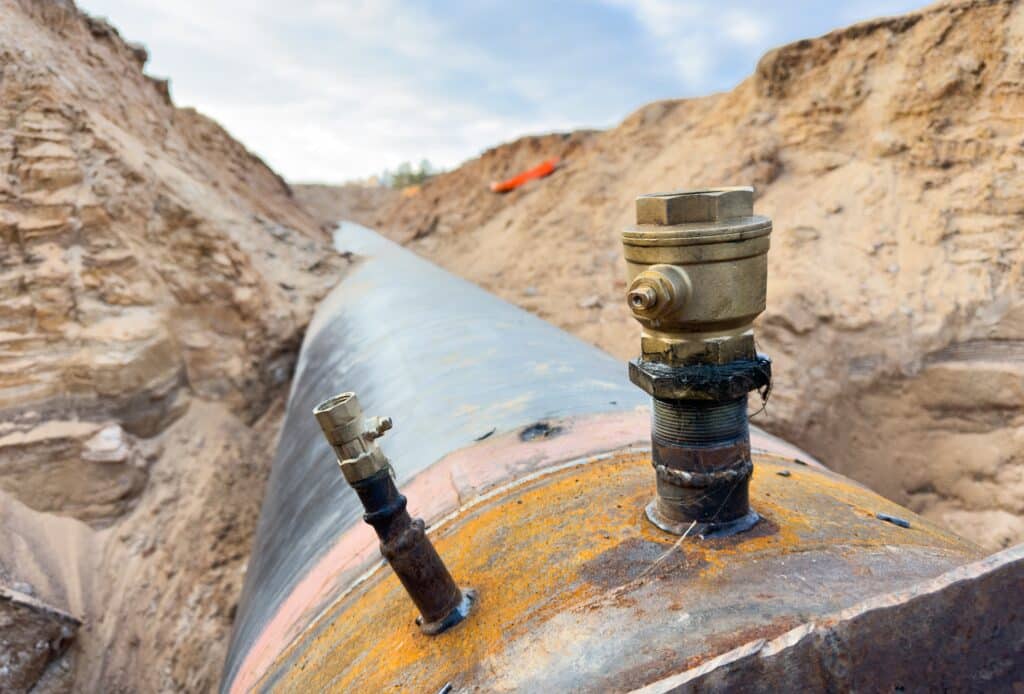
Data center growth affects natural gas demand and energy prices
Everybody wants a piece of the U.S. electricity grid, and wait times to connect are long. Data center companies and developers are increasingly coming up with their own solutions to their power needs. Often, that means turning to off-grid gas power plants.
These aren’t minor energy consumers. Meta is building 5.2 gigawatts[6] of natural gas plants in Louisiana to power its data center development — for scale, that’s comparable to the power requirements[7] of five medium-sized American cities.
This sudden rush to build gas at such a massive scale throws off supply and demand and messes with pricing dynamics for everyone.
What drives natural gas and electricity prices when demand rises?
The rush to power new data centers with gas sets us up for a price increase double whammy. First, the quick spike is forecast to increase U.S. gas demand over 5 percent above 2025 levels,[8] which could raise wholesale gas prices roughly 6-16 percent and add up to $14 billion to customer gas bills.
Second, the gas price hike would have knock-on effects across the electricity market. By driving up the price of gas used by power plants, market prices for all electricity go up, not just power from gas plants.
In other words, the go-to power build for new data centers puts consumers on the hook for increased energy costs directly and indirectly. Families who heat their homes with gas pay twice. Since data centers run 24/7, they compete with households for gas around the clock, including at peak heating times when pipelines are already maxed out and prices are higher.
Heightened gas pipeline congestion from the surge in demand can make things worse and quickly raise gas prices in places with high heating demand. Looking at a worst-case scenario, supplying just 5 percent more gas for data centers could increase gas prices by up to 17 percent[9] from increased congestion and temporary supply constraints.
Extreme weather also poses a real risk of gas price spikes for consumers. Storms can lower gas production, tightening supply and hiking prices even further. When Winter Storm Fern hit in January 2026, it caused a brief 12 percent drop[10] in U.S. gas production — even that relatively minor hiccup sent Henry Hub wholesale prices surging to eight times the 2025 average. As of this past January, millions of Texas residents were still paying off[11] the massive natural gas price increases that occurred during Winter Storm Uri in 2021. Now imagine how these spikes could have looked with data centers demanding an extra 5 percent (or more) of gas supplies during these emergencies.
Price volatility hits lower-income families hardest, since energy eats up a bigger share of their budgets, and they have no control over the market swings behind those surprise bills.
The Ratepayer Protection Pledge only covers data center electricity costs on consumer bills – not gas
Americans face a clear set of risks from data centers’ gas build-out, at a time when rising bills are already a concern.
Data centers are increasingly making promises to avoid increasing consumer costs — but gas is a glaring gap.
The Ratepayer Protection Pledge,[12] a voluntary commitment led by the Trump administration in the spring of 2026, asks companies and developers to promise to bring their own power supply and cover the costs for upgrading power delivery infrastructure. It has been signed by leading tech companies, including Meta, Oracle, and OpenAI, a promising start for insulating Americans from some of the key harms of the data center build-out.
Unfortunately, it has a major loophole: as noted, many of these companies and developers are “BYOing”[13] with off-grid gas plants, which opens up the risk of serious gas price surges. The existing pledge only covers electricity costs, not gas costs – it doesn’t cover the ways outsized gas reliance will hike consumer energy bills.
A Gas Customer Protection Pledge could insulate consumers from data-center-driven gas costs
A Gas Customer Protection Pledge would close that loophole and better protect Americans from data-center-driven energy costs.
First, companies would commit to bringing and paying for their own power. That’s simplest in the form of renewables and storage: Since these are paid for up-front and don’t have the fuel purchase costs that gas plants do, they won’t add to ongoing energy prices for consumers.
Second, if companies do use gas for their data centers, they’d commit to holding customers blameless for incremental costs associated with that additional demand. Companies would also fully cover the cost of any new gas pipelines, infrastructure upgrades, or other maintenance — and provide upfront financial security to cover the costs of any new infrastructure, whether or not they end up using it. No stranding of assets allowed. Since exact cost impacts can be hard to pin down, companies could also contribute to low-income families through bill credits or programs that help them cut their reliance on gas.
Third, companies would invest in local job creation and workforce development, and contribute to the community tax base to support schools, fire departments, and other county programs.
Finally, companies would agree to let other customers “go first” when gas supply is tight, ensuring home heating needs come before data center powering needs.
This mirrors the existing Ratepayer Protection Pledge, adjusted so that gas prices aren’t allowed to creep up with American families left holding the bag.
Newly elected officials should explore a Gas Consumer Protection Pledge
The data center surge — and broader affordability crisis — may not be going anywhere, but policymakers can do something near-term to make sure families aren’t on the hook for this costly rush to gas. The solution is making sure consumers don’t pay for any of the new data-center-driven gas build-out. Encouraging new development powered by wind, solar, and storage would also avoid added fuel costs for consumers.
As the 120th Congress, newly elected governors, and state legislators across the U.S. take office in January 2027, they should require a Gas Customer Protection Pledge to protect U.S. consumers from data centers contributing to spiking gas prices. Federal action would be most effective, but states can take action on their own to require these commitments and protect both themselves and their neighbors. A full embrace of these solutions is one of the fastest ways to tackle energy price volatility and ease the burden on Americans.
[1] United States Energy Information Administration, “Data Center Server Energy Use Grows Across The Commercial Building Stock,” United States Energy Information Administration, 2026, https://www.eia.gov/todayinenergy/detail.php?id=67704/.
[2] United States Energy Information Administration, “Natural Gas: U.S. Price Of Natural Gas Delivered To Residential Consumers,” United States Energy Information Administration, 2026, https://www.eia.gov/dnav/ng/hist/n3010us3m.htm/.
[3] Jenny Martos, “U.S. Gas Power Proposal Tied To Data Centers Nearly Double In Six Months,” Global Energy Monitor, 2026, https://globalenergymonitor.org/research/us-gas-power-proposals-tied-data-centers-nearly-double-six-months/.
[4] Matthias Fripp, “Data Centers Must Promise Not To Raise Americans’ Gas Bills,” Substack, 2026, https://thepowerline.substack.com/p/data-centers-must-promise-not-to/.
[5] Sonia Aggarwal and Jamie Van Nostrand, “Electricity Isn’t The Only Thing Getting More Expensive Because Of AI,” Heatmap, 2026, https://heatmap.news/ideas/gas-customer-protection-pledge/.
[6] Nicholas G. Miller, “Meta Agrees To Fund Local Energy Infrastructure For Louisiana Data Center,” The Wall Street Journal, 2026, https://www.wsj.com/tech/meta-agrees-to-fund-local-energy-infrastructure-for-louisiana-data-center-b795bc96/.
[7] Matthias Fripp, “Data Centers Must Promise Not To Raise Americans’ Gas Bills,” Substack, 2026, https://thepowerline.substack.com/p/data-centers-must-promise-not-to/.
[8] Christopher Louney, “Natural Gas Powers The Data Center Boom,” RBC Capital Markets, 2026, https://www.rbccm.com/en/insights/2026/05/natural-gas-powers-the-data-center-boom/.
[9] Matthias Fripp, “Data Centers Must Promise Not To Raise Americans’ Gas Bills,” Substack, 2026, https://thepowerline.substack.com/p/data-centers-must-promise-not-to/.
[10] American Gas Association, “Natural Gas Market Indicators – February 5, 2026,” American Gas Association, 2026, https://www.aga.org/research-policy/resource-library/natural-gas-market-indicators-502nd-edition/.
[11] Shelby Webb, Carlos Anchondo, and Peter Behr, “Natural Gas Prices Spike As Winter Storm Approaches,” E&E News, 2026, https://www.eenews.net/articles/natural-gas-prices-spike-as-winter-storm-approaches/.
[12] The White House, “Ratepayer Protection Pledge,” The White House, 2026, https://www.whitehouse.gov/releases/2026/03/ratepayer-protection-pledge/.
[13] Energy Innovation, “Bring Your Own Power: How Data Centers Can Solve Their Own Energy Problem,” Energy Innovation, 2026, https://energyinnovation.org/expert-voice/bring-your-own-power-how-data-centers-can-solve-their-own-energy-problem/.