Putting Humans Into Climate Models
This research review explains new studies that demonstrate how incorporating social systems into climate models is important for creating realistic climate forecasts and making informed policy decisions.
This research review explains new studies that demonstrate how incorporating social systems into climate models is important for creating realistic climate forecasts and making informed policy decisions.
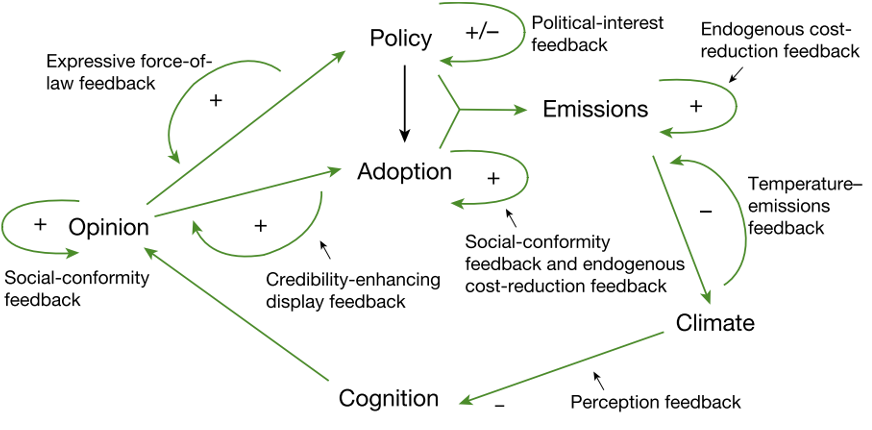
This research review explains new studies that demonstrate how incorporating social systems into climate models is important for creating realistic climate forecasts and making informed policy decisions.
EI’s Shelley Wenzel explains Oregon has long been a climate leader, but now is not the time for policymakers to rest on their laurels if the state is meet its greenhouse gas reduction goals.
EI’s Hadley Tallackson explains that by creating structures for marginalized communities to generate their own renewable electricity, community-driven programs like RECs improve energy justice, but they need careful design to not worsen inequities.
EI’s Eric Gimon explains California’s grid can get more reliable the cleaner it gets, but policymakers need to take continued action to make it happen.
EI’s Dan Esposito explains that California can set an example for other states with ambitious climate targets by cleaning its grid while reliably keeping the lights on.
New research showcases how coupling existing state efforts (1) to accelerate renewable energy adoption in underserved low-income communities and (2) to replace aging gas distribution networks with district heating and cooling could transform overburdened communities into high energy-performance communities that are safer and more resilient.
EI’s Mike O’Boyle explains that while California hit a significant milestone on an April day, much works remains for the state to reach its 100% clean energy target.